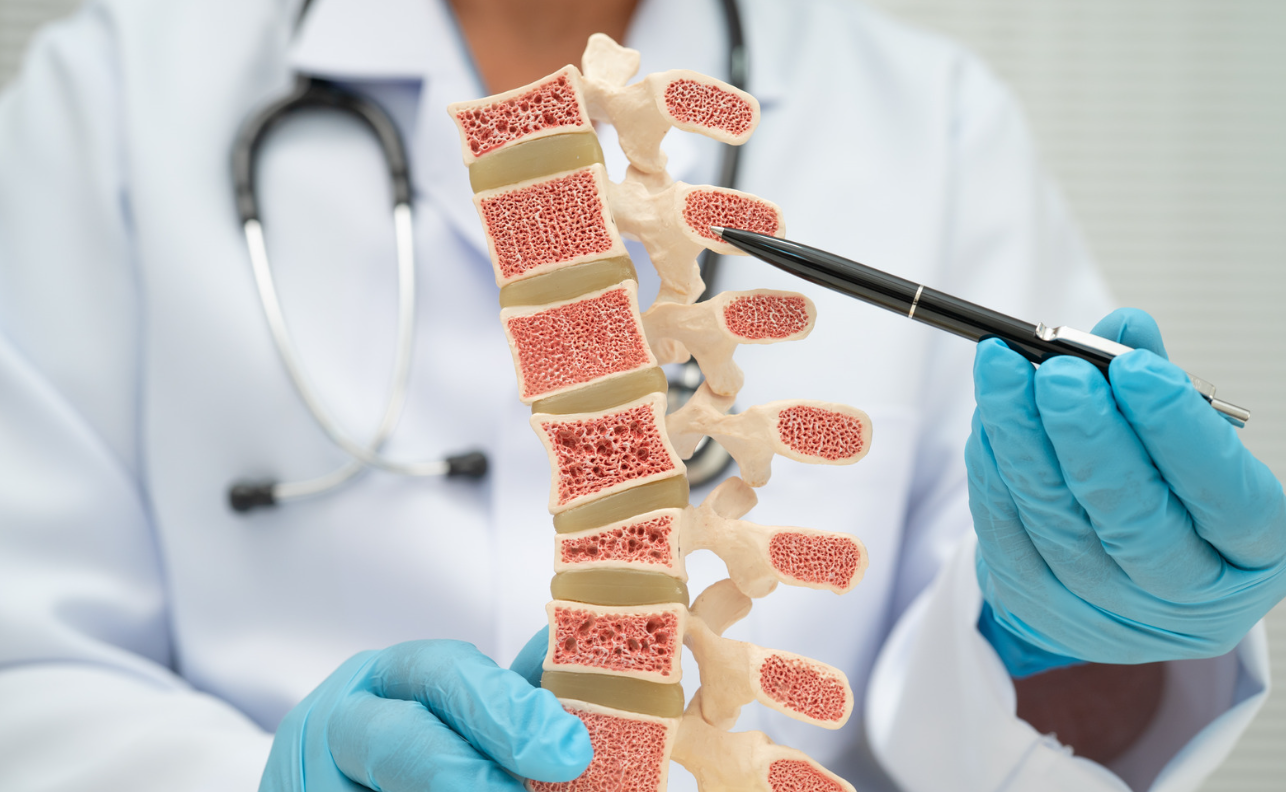
Nobody thinks about their bones until something breaks. That is just the reality of it. You do not feel bone loss happening. There are no symptoms. No warnings. One day you are fine, and the next day you step off a curb wrong or catch yourself from a stumble and suddenly you have a fractured wrist or a compression fracture in your spine. That is usually when the doctor says the word osteoporosis for the first time, and by then you have already lost a significant amount of bone.
An estimated 10 million Americans have osteoporosis and another 44 million have low bone density that puts them at increased risk. If you are over 50, especially if you are a woman past menopause, the odds are not in your favor. Women can lose up to 20% of their bone density in the five to seven years right after menopause. Most of them have no idea it is happening.
But here is the part that most people never hear. Your bones are living tissue. They respond to stress by getting stronger, just like muscles do. And the single most effective way to stress your bones in a healthy, controlled way is strength training. Not calcium supplements. Not walking. Strength training.
When you lift weights or perform resistance exercises, the muscles pull on the bones they are attached to. This mechanical stress triggers a process called bone remodeling. Your body breaks down old bone tissue and replaces it with new, denser bone. Over time, this process makes bones significantly stronger and more resistant to fracture.
This is not theoretical. A landmark study published in the Journal of Bone and Mineral Research found that postmenopausal women who performed high-intensity resistance training twice a week for eight months significantly improved bone density in their spine and hips. Those are the two areas most vulnerable to osteoporotic fractures. The women who only did light exercise or no exercise saw no improvement or continued losing bone.
The key word in all of this is load. Your bones need to feel real force to trigger remodeling. Light dumbbells and resistance bands are a start, but the research consistently shows that heavier loads produce better bone density results. This does not mean you need to squat 200 pounds on day one. It means your program needs to be progressive, gradually increasing the weight over time so your bones keep adapting.
Not all exercises build bone equally. The biggest gains come from compound movements that load the areas most at risk for fractures.
Squats and squat variations load the spine and hips simultaneously. They also build the leg and glute strength that prevents the falls that cause fractures in the first place. Deadlifts strengthen the entire posterior chain and create significant loading through the spine and hips. Overhead presses load the spine vertically and build shoulder and wrist strength. Rows strengthen the upper back and contribute to the posture that keeps your spine aligned and protected.
Walking, jogging, and stair climbing create impact forces that also stimulate bone growth, and they are good additions to a strength program. But they cannot replace resistance training. The mechanical load from muscles pulling on bones during a heavy squat or deadlift creates far more bone-building stimulus than any amount of walking.
This is where it gets important to know what you are doing. Certain movements can be risky for people with osteoporosis or significant bone loss. Heavy crunches, sit-ups, or loaded forward bending put excessive stress on osteoporotic spines and can cause compression fractures. Jumping, running on hard surfaces, or any activity with sudden jarring forces should be approached with caution. Rotational movements with heavy weights can stress vulnerable vertebrae.
This is exactly why people with osteoporosis or osteopenia need to be trained by someone who understands the difference between safe loading and dangerous guesswork. The exercises that build the most bone are also the ones that require the most technical precision. A squat that loads the spine beautifully when done correctly can cause a compression fracture when done wrong. The difference between building bone and breaking bone often comes down to form, and form requires coaching.
Research suggests a minimum of 2 to 3 resistance training sessions per week for meaningful bone density improvements. Each session should include exercises that load the spine, hips, and wrists, which are the three most common fracture sites. Consistency matters far more than intensity. A moderate program performed consistently for 12 months will produce far better results than an aggressive program abandoned after six weeks.
Bone remodeling is a slow process. You will not see changes on a DEXA scan in four weeks. But after six months to a year of consistent progressive strength training, the improvements can be significant enough that your doctor notices. Some of the most rewarding conversations we have are when a member comes back from their annual bone density scan and tells us the numbers went up instead of down.
Strength training is only half the equation. Your body needs the raw materials to build bone. Calcium intake should be around 1,200mg per day for adults over 50. Dairy, leafy greens, sardines, and fortified foods are good sources. Vitamin D is essential for calcium absorption, and while living in the Coachella Valley gives you an advantage with sun exposure, many older adults still run low and may need supplementation. The recommended amount is 800 to 1,000 IU per day.
Protein is the third piece. Adequate protein supports both muscle and bone health. Aim for 0.7 to 1.0 grams per pound of body weight daily. Most adults over 50 are eating about half the protein they need, and that deficiency undermines both their strength training and their bone health.
Building stronger bones is critical, but preventing the falls that cause fractures is equally important. For someone with osteoporosis, a fall that would bruise a healthy person can mean a broken hip or a compression fracture in the spine. And hip fractures after 65 are devastating. Nearly 20% of people who break a hip do not survive the following year. Those who do survive often never regain full independence.
The good news is that the same strength training that builds bone also builds the balance and stability that prevents falls. Strong legs catch you when you stumble. A strong core keeps you upright on uneven ground. Good grip strength means you can grab a railing when you slip. These are not abstract fitness goals. They are the physical capabilities that determine whether a misstep is a minor moment or a life-changing event.
Specific balance exercises like single-leg stands, tandem walks, and stability challenges should be woven into every training session. In the Coachella Valley, where outdoor activities like golf, hiking, and pickleball are part of daily life, fall prevention is not just about avoiding disaster. It is about maintaining the active lifestyle you moved here for.
Whether you have been diagnosed with osteoporosis, told you have osteopenia, or simply want to protect your bone health as you age, strength training is the most powerful tool available. Research shows that bone responds to loading at any age. Women in their 60s and 70s have improved their bone density through progressive resistance training. It is never too late.
At Strong Republic Personal Training in the Coachella Valley, we work with members every week who are building stronger bones through coached, progressive strength training. Our trainers understand osteoporosis, joint limitations, and the specific needs of adults over 40. If your doctor has told you to exercise for your bones but nobody has shown you exactly what that means, this is where you start.
Your bones are either getting stronger or getting weaker. There is no standing still. The choice is yours.


